Data acquisition and integration
Make disparate sales, media, pricing, retail, CRM, agency, survey, social, and clinical data usable through data models, automated processing, and clear governance.
Data, analytics & technology
I connect marketing data, technology, analytical methods, and business teams to build systems that produce insight. Marketing mix modeling is one important application—not the entire practice.
Video library
A guided collection of the concepts behind the work: why MMM matters, the 4 P’s, marketing response, distribution, price, and brand.

Building MMM in-house
The people, data, technology, governance, and capabilities to consider when bringing MMM in-house.
Big picture
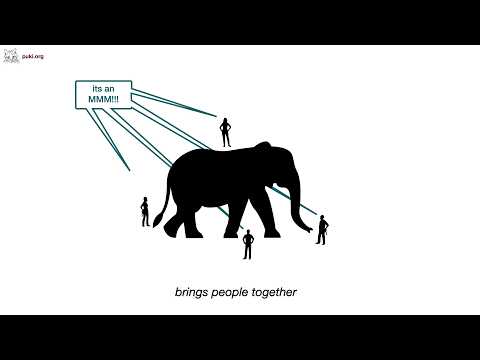
A plain-language introduction to why marketing mix modeling has become such a widely used decision tool.
Series introduction
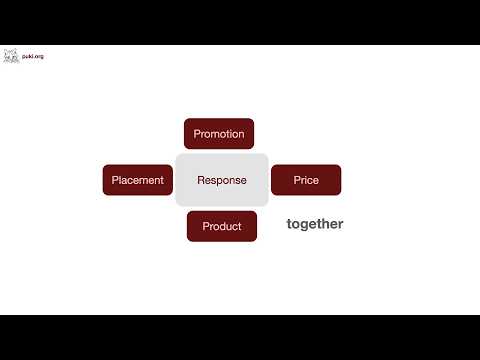
An introduction to the marketing mix and how product, price, placement, and promotion work together.

4 P’s: Placement
How distribution, availability, store presence, and points of distribution shape sales.

4 P’s: Price
Price elasticity, thresholds, promotions, and the role of price in marketing response.

Response modeling
A closer look at brand attraction and how it can be considered alongside promotional support.
What I help solve
Make disparate sales, media, pricing, retail, CRM, agency, survey, social, and clinical data usable through data models, automated processing, and clear governance.
Design and build web applications, modeling systems, dashboards, and repeatable workflows that reduce manual work and put analysis directly in the hands of teams.
Apply classification, neural networks, natural-language processing, sentiment analysis, transformers, LLMs, RAG, and MCPs where they add practical value.
Develop experiments, regression models, segmentation, market structure, conjoint, structural equation, forecasting, and attribution approaches grounded in the decision.
Connect methods to real business questions through response curves, ROI, marketing mix modeling, media evaluation, promotion analysis, and scenario planning.
Bring analysts, marketers, agencies, data engineers, finance, IT, and executives into one workable process—with clear definitions, review, documentation, and accountability.
The foundation
My most durable work has been building systems that make analysis possible: recognizing unfamiliar file structures, normalizing dimensions, integrating feeds, creating transparent data workflows, and turning repeated analytical tasks into software.
Projects such as freeloadr, the JMS modeling system, and Publicis’s Data Foundations Project show that capability in practice. The goal is not more data for its own sake—it is trusted, accessible data that teams can use repeatedly.
Technology in practice
How I work
Define the outcome, decisions, markets, products, time horizon, and evidence each stakeholder needs.
Audit data quality, business structure, promotion, distribution, competitive activity, and the limitations of the available evidence.
Build and challenge the model against business logic, model diagnostics, statistical evidence, and plausible alternative explanations.
Connect coefficients and response curves to ROI, scenarios, tradeoffs, and recommendations leaders can actually use.
Create an application, dashboard, data workflow, and repeatable refresh process where ongoing measurement adds value.
Relevant experience
Built marketing response models for physician and patient-facing activity, HCP call plans, media, launches, new-patient starts, and portfolio planning across brands including Eliquis, Humira, Rinvoq, Xtandi, Padcev, and Aristada.
Work has included agency and client collaboration, rigorous scientific review, international market rollouts, and helping Pfizer move a quarterly modeling function in-house.
Measured SKU, brand, category, promotion, distribution, and media performance across consumer goods portfolios, including Molson Coors, Beam Suntory, Haleon, Sanofi, and Procter & Gamble.
Experience ranges from national sales to store-level data, sports sponsorships, retail execution, e-commerce shifts, and complex multi-market delivery.
Designed store-level models, market clusters, forecasting systems, and response studies for retailers and subscription businesses such as National Vision and Comcast.
That work connects local media, competitive markets, customer behavior, distribution changes, and national campaign decisions.
A broader perspective
Marketing activity happens inside the real market: sales respond to price, product availability, product innovation, consumer expectations, competitors, geography, and the way channels influence one another.
I organize data around the fundamentals of the marketing mix—period, market, product, and fact—while treating placement, product, price, and promotion as connected forces. That approach helps reveal problems that a dashboard or attribution report may miss.
What comes next
Modern marketing datasets are larger, richer, and more granular than the simple time-series structures that dominated early MMM. New methods—including neural networks and transformer-style architectures—create opportunities to interrogate more complex patterns across markets, products, and time.
The goal is not novelty for its own sake. It is a stronger answer to questions about campaign performance, competitive launches, quarter-level investment, market differences, and planning under uncertainty.